Bunker: Zombie Survival Games
- 4.3
- Rating
- 5.00M
- Installs
- Free
- Price
 Analysis by App-foxy
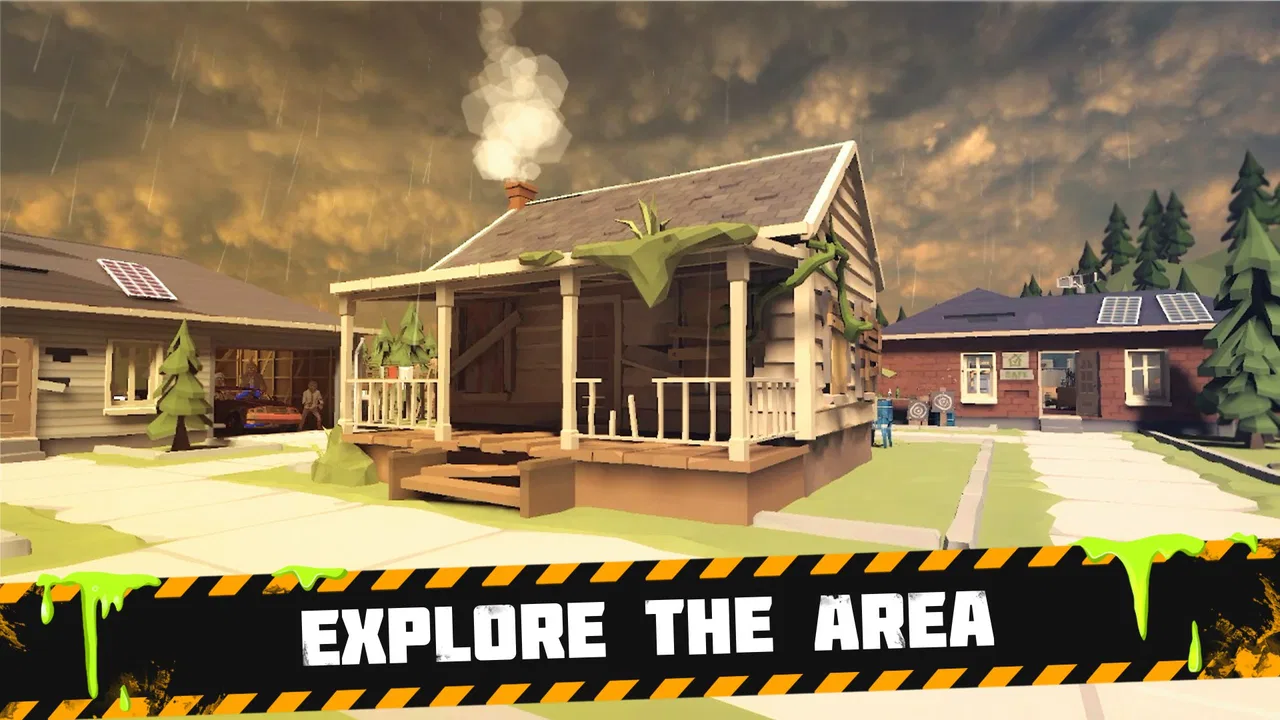
I went into Bunker: Zombie Survival Games expecting a familiar post-apocalyptic adventure, but its strongest quality is not simply the presence of zombies or abandoned shelters. It is the way the game creates pressure around ordinary decisions: where to go next, what to risk, and when to stop pushing forward. Developed by Go Dreams, this free adventure game uses a 3D survival setting with a dark, atmospheric tone that is easy to understand but less easy to manage well.
The basic premise is immediately accessible. You are moving through a dangerous world shaped by collapse, trying to survive inside and around bunker-like environments while dealing with threats and limited room for mistakes. The game is aimed at players aged Everyone 10+, and that makes sense in practice: the mood is tense and bleak, but it is presented as an accessible game rather than an extreme horror experience.
After spending time with it, I would describe it as a good fit for someone who likes survival adventures but does not want a complicated simulation filled with menus and technical systems. It is also a reasonable choice for short sessions, although the atmosphere encourages me to stay longer than planned. The important thing is to approach it as a careful exploration game, not as a fast action title where charging ahead is always rewarded.
You May Also Like

 Blood Strike: 2.5 Anniversary
Blood Strike’s Loadouts Turn Every Drop Into a Tactical Gamble
A close look at Blood Strike’s custom loadouts: how fast access to signature weapons reshapes its battle royale rhythm, rewards preparation, and narrows the gap between fights.

 Pandora - Music & Podcasts
Pandora’s Music Is Easy to Start, but Harder to Recover
Pandora’s strength is its low-effort path from a seed to a station. Its weak spot is how much confidence it asks you to place in connection, setup, and quiet recovery.

 8 Ball Pool
 Is Built on Rivalries, Rematches, and Routine
A close look at the rivalries, rematches, shared routines, and unanswered safety questions that turn a quick pool match into a persistent mobile community.

 Samsung Music
’s Quiet Strength Is Playing What You Already Own
Its reach comes less from spectacle than from dependable access to a personal library. That simplicity is both the app’s strongest retention engine and its ceiling.

 AccuWeather: Weather Radar
AccuWeather Review: A Quick, Clear Forecast for Everyday Decisions
For everyday plans, the best forecast is the one you can understand quickly. AccuWeather makes rain timing, radar, and local conditions easy to act on, with a few trade-offs.

 Hill Climb Racing
Why Hill Climb Racing Still Turns Crashes Into One More Run
A tiny car, a bumpy hill and one more upgrade: Hill Climb Racing keeps resurfacing because its simple chaos makes every near-miss feel personal.
More From Our News Desk



How the bunker loop feels in everyday play
I find the bunker loop works best when I treat each outing as a chance to learn, not just a push toward the next threat. That makes even a short session feel purposeful: I can notice what unsettles my approach, adjust one habit, and return with a clearer plan. The next question is how that steady routine holds up across the game’s broader current state.
Start with a cautious routine
My most reliable way to play is to treat every new area as a small problem rather than a corridor to clear. I first look at the surroundings, identify obvious paths, and avoid spending resources or taking risks before I understand the space. That sounds simple, but it changes the entire rhythm. The game feels much less frustrating when I stop treating every movement as progress and start treating information as progress.
A practical session might begin during a short break in the evening. I can play for a few minutes, move into a new section, check what is around me, and decide whether continuing is sensible. This makes the game suitable for players who enjoy gradual exploration. It is not necessary to turn every session into a long campaign push; a careful player can make useful progress by learning the layout and recognizing danger patterns.
The bunker setting works especially well with this approach. Tight spaces and ruined surroundings make me pay attention to what is directly ahead instead of relying on a broad, open-world view. I found that the atmosphere becomes more effective when I slow down. Rushing reduces the tension to a sequence of mistakes, while patience lets the environmental design do more of the work.
Use movement as a decision, not a reflex
One of the first habits I developed was separating movement into two purposes: scouting and committing. Scouting means entering far enough to understand what kind of situation I am facing. Committing means continuing even though I have accepted that the next section may cost time, health, or useful supplies. Keeping those ideas separate helps prevent the common survival-game mistake of drifting forward simply because the next path is visible.
I also recommend using a brief pause between encounters. Instead of immediately moving toward the next objective, I look at my current condition and ask whether I am prepared for another confrontation. This is particularly useful when playing on a phone, where a small control mistake can turn a manageable situation into a costly one. The game rewards a calm thumb more than frantic tapping.
That does not mean every moment should be slow. Once I understand a familiar route, I move through it more confidently and save my attention for places where the environment changes. The useful pattern is not “always be cautious”; it is “be cautious when information is incomplete, then become efficient when the route is known.” That distinction makes repeat attempts feel more purposeful.
What the atmosphere adds to the mechanics
The post-apocalyptic presentation is more than decoration. Dark surroundings and the bunker theme make uncertainty part of the challenge. I often find myself checking corners and entrances because the setting encourages me to expect trouble. Even when the underlying interaction is straightforward, the presentation gives ordinary movement a sense of consequence.
Players looking for bright, relaxed exploration may find this oppressive rather than engaging. For me, the mood is one of the main reasons to continue, but it also means the game is better suited to focused play than to casual background gaming. If I am distracted by another video or conversation, I lose the careful rhythm that makes the adventure work.
Settings and controls worth checking first
Before settling into a long session, I would check the available control and presentation options rather than accepting the default arrangement automatically. On a phone, the position and sensitivity of touch controls can have a direct effect on survival. A layout that feels comfortable during the opening moments may become awkward when movement, turning, and quick reactions are required together.
I prefer to test controls in a low-risk area. I move in short directions, turn without rushing, and check whether my thumb covers important parts of the screen. This is a more useful test than judging the layout from a menu alone. If the game allows adjustment, I would prioritize visibility and reliable reach over a compact arrangement that looks neat but forces uncomfortable hand movement.
Graphics settings also deserve attention. The current version is 5.3.0, and the game is designed for devices running Android 8.0 or later. That gives it a broad compatibility range, but older or less powerful phones may still benefit from choosing a smoother presentation over maximum visual detail when those choices are available. In a survival game, stable control matters more to me than slightly sharper scenery.
I would also check audio levels before playing in a shared room. The atmosphere depends heavily on sound, but not every player wants a tense game to dominate the room. Lowering effects while keeping important environmental cues audible can make the experience more comfortable. If you play with headphones, take short breaks; the enclosed setting can become tiring when every sound is treated as a warning.
Repeatable habits that make progress easier
Experienced play in this game is less about discovering a secret trick and more about building a repeatable process. My preferred sequence is to observe, choose a route, move with a purpose, and reassess after danger. Repeating that sequence removes a lot of impulsive decisions. It also makes failures easier to understand because I can identify whether the problem was poor positioning, impatience, or a bad decision made before entering an area.
A second useful habit is to avoid changing several things at once. If I alter my control layout, rush through a familiar section, and experiment with a new route in the same attempt, I cannot tell what caused a failure. I get better results by changing one behavior, then comparing the next attempt with the previous one. This is a small point, but it is exactly the kind of discipline that separates random retries from genuine improvement.
I also recommend setting a stopping point before beginning a session. Survival games can encourage the “one more attempt” cycle, especially after a mistake that feels avoidable. Deciding in advance to stop after reaching a safe point or after a fixed number of attempts prevents frustration from taking over. The game is more enjoyable when I return with a clear head instead of trying to recover progress while annoyed.
Managing risk without turning the game into a checklist
There is a temptation to reduce every survival adventure to inventory arithmetic, but that is not how I get the most from this one. I pay attention to resources and danger, yet I do not want to spend the whole session counting every possible outcome. The better balance is to identify the decisions that can genuinely change a run and avoid wasting mental energy on minor details.
For example, I am more careful before entering an unfamiliar section than when revisiting a route I already understand. I also avoid taking optional risks immediately after a difficult encounter. That creates a simple rhythm: recover from a demanding moment, learn the next space, then decide whether the reward is worth the exposure. This approach feels natural in the bunker setting and keeps the game from becoming needlessly exhausting.
If you are playing on a smaller screen, keep your attention on readability. Dark environments can make visual information harder to separate, especially with brightness turned down. I would rather raise the screen brightness slightly and preserve clear movement than play in a visually dramatic but uncomfortable setup. The goal is not to make the game bright; it is to make important shapes and routes easy enough to read.
Where the game shows its limits
The same focused design that makes the experience approachable can limit it for players who want a deep survival simulator. I do not come to this game expecting the extensive crafting chains, broad construction systems, or highly detailed management found in larger survival titles. Its appeal is the compact adventure atmosphere, not the promise of becoming a full-time settlement manager.
That distinction matters when choosing between this and the usual alternatives. If you want a long sandbox with complex building and a world that constantly generates new objectives, another survival game will probably serve you better. If you prefer a more directed, atmospheric experience that can be understood quickly on a mobile device, this is a more comfortable match.
The touch interface is another possible source of friction. Mobile controls can never feel exactly like a physical controller, and tense movement makes that difference more noticeable. Players with limited patience for virtual controls should try a short session before committing emotionally to the game. I found the controls manageable once I stopped making sudden movements, but someone seeking extremely precise action may still prefer a controller-focused title.
There is also the question of monetization. The game is free to download and includes in-app purchases ranging from a few cents to $19.99 per item. I would approach those purchases as optional conveniences rather than part of the reason to start playing. Anyone who dislikes seeing purchase options in a free game should keep that preference in mind, while players who are comfortable ignoring them can focus on the survival loop itself.
Who will enjoy it, and who should skip it
I would recommend this adventure to someone who enjoys post-apocalyptic settings, tense exploration, and games that work in manageable sessions. It is especially appealing if you like learning a route through repetition instead of being handed a constant stream of instructions. The atmospheric presentation gives the experience a recognizable identity, and the free entry point makes it easy to test without planning a purchase first.
It also suits players who want a game that can be played alone and at their own pace. A commuter with a few quiet minutes, for instance, can use one session to explore a section and another to refine the approach. The important condition is having enough attention to engage with the environment. This is not the best choice for playing while multitasking or while looking for instant, low-focus entertainment.
I would skip it if your priority is competitive multiplayer, cheerful exploration, or a highly elaborate survival economy. I would also look elsewhere if you need the most precise possible controls or want a game that remains fresh mainly through an enormous open world. The bunker atmosphere is a strength, but it is a specific kind of strength; it will not compensate for a mismatch in preferred genre.
How its audience reflects its appeal
The game has built a substantial mobile audience, with over five million installs and an average rating of 4.3 from around ninety-five thousand ratings. Those figures suggest that its combination of survival tension and accessible adventure has reached well beyond a niche group. There are also around two thousand written reviews, which gives prospective players a useful sense that the game has been tried by a broad range of mobile users.
I do not read that popularity as proof that every player will enjoy it. Instead, it tells me that the core idea is easy to approach. The game does not require a specialist knowledge of survival games before it becomes understandable. Its real test comes afterward: whether the atmosphere, repeated exploration, and mobile control style are satisfying enough for you to keep refining your habits.
My verdict after building a consistent play style
Go Dreams has made a free adventure that works best when played thoughtfully. The bunker setting, 3D presentation, and post-apocalyptic mood give it a clear personality, while the straightforward survival structure makes it approachable on Android devices that meet the system requirement. I appreciate that I can begin without a long preparation period, then gradually improve by changing how I observe and move.
My strongest recommendation is to treat each attempt as practice in decision-making rather than a race. Check the controls, favor stable performance, learn familiar routes, and pause before committing to an unknown area. Those habits do more for the experience than rushing toward every visible objective. They also make the game easier to judge fairly: if it still feels unrewarding after a patient approach, its focused design probably is not your preferred style.
The age rating of Everyone 10+ makes it suitable for a broad audience, although its bleak atmosphere may not appeal to younger or more sensitive players. For me, the mood is effective without becoming the only feature. I return because exploration and risk work together, not merely because the world looks ruined.
Overall, I see this as a solid choice for mobile players who want a free, atmospheric survival adventure with a clear bunker identity. It is not a replacement for a huge sandbox or a precision action game, and the in-app purchase range is worth remembering before you start. But if you want a focused post-apocalyptic experience and are willing to develop a careful routine, Bunker: Zombie Survival Games is easy to recommend to a friend who enjoys tense exploration more than endless complexity.
FAQs for Bunker: Zombie Survival Games
01What is Bunker: Zombie Survival Games about?
Bunker: Zombie Survival Games is a survival-focused zombie adventure in which you explore dangerous environments, search for useful supplies, and try to stay alive while threats surround your shelter. The game combines exploration, resource management, combat, and decision-making. Progress generally depends on improving your equipment, managing limited materials carefully, and learning when it is safer to fight, hide, or retreat.
02Can I play Bunker: Zombie Survival Games offline?
Whether the game works completely offline can depend on the version installed, device settings, and features that require online services. Some gameplay elements may be available without a constant connection, but updates, advertisements, cloud saving, events, or other online functions may not work offline. It is best to check the store listing and test the game after installation if offline access is important to you.
03Is Bunker: Zombie Survival Games free to download and play?
Bunker: Zombie Survival Games may be available as a free download, but free access does not always mean that every feature is unlimited. Depending on the release, the game can include advertising, optional in-app purchases, paid resources, or progression-related offers. You can usually begin playing without paying, although careful resource management may be necessary if you prefer not to spend money.
04What devices are compatible with the game?
Compatibility depends on your Android or iOS version, available storage, device performance, and the specific edition distributed in your region. Zombie survival games can use considerable processing power when displaying enemies, environments, and effects, so older phones may experience slower loading or reduced performance. Always review the current store requirements and keep enough free space for updates and saved data.
05Does Bunker: Zombie Survival Games contain combat, scary content, or advertisements?
Yes, players should expect zombie encounters, survival pressure, and potentially frightening scenes or dark themes. The intensity can vary according to the game mode and location, but the experience is designed for users who enjoy suspense and hostile enemies rather than relaxed casual play. Advertisements or optional purchases may also appear, so parents should review the age rating and store information before allowing younger players to install it.
Pros
- Tense survival gameplay rewards careful planning and resource management.
- Dark atmosphere and zombie encounters create strong horror-game immersion.
- Crafting and scavenging provide meaningful reasons to explore each area.
- Progression systems offer goals beyond simply surviving individual attacks.
- Playable offline
- making it suitable for gaming without an internet connection.
Cons
- Limited resources can make early progression feel unnecessarily punishing.
- Enemy behavior may become predictable after extended play sessions.
- Some upgrades require considerable grinding before their benefits are noticeable.
- Touch controls can feel imprecise during fast combat situations.
- The bleak setting and repetitive tasks may not appeal to casual players.

Bunker: Zombie Survival Games
Gallery